
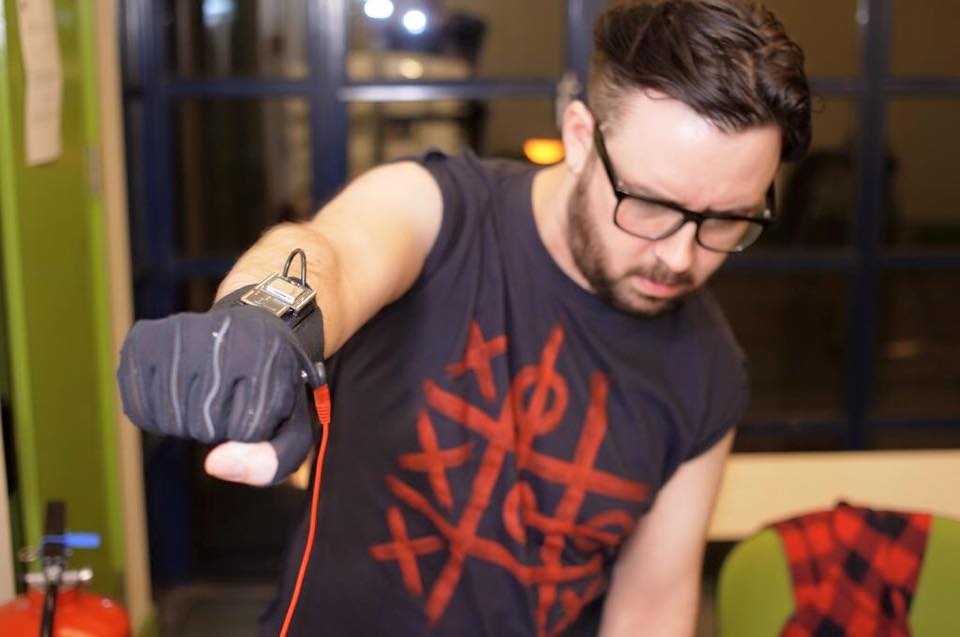
I’ve been delivering Disability Equality training across the music sector since 2018, and if there’s one idea that’s shifted people’s perspectives most profoundly, it’s the Social Model. For most people, it changes the very definition of what we mean when we say we are Disabled.
Nowadays, I find many more people know what it is, but there is still much to be done to embed its usage, so here’s my quick guide to the idea we call the Social Model of Disability.
What is a Model?
A “Model” in this context is a kind of thinking tool; a way to look at something from a distinct perspective – in this instance, Disability.
To understand the Social Model, we have to understand the Medical Model of Disability. The Medical – ie most dominant – Model posits that Disability is the burden of Disabled people. That we are the ones that “have” it, the ones who carry it. It is for us to change to fit into society. Fix our broken bodies and minds, if we hope to fit into society.
The Social Model challenges the idea that Disability is something that is “in” Disabled people. It says that Disability is an external force; that it is the interaction between someone’s health conditions and the barriers that society both consciously and unconsciously upholds.
The Social Model of Disability argues that it is not Disabled bodies, but rather societal barriers, that define Disability.
Perhaps the most commonly given practical example of the Social Model is a ramp. A ramp outside a building – as opposed to steps – removes the societal barrier, allowing a wheelchair user to access the building. The person in this scenario is not Disabled by the impairment that requires them to use a wheelchair, but by the stairs that prevent them accessing the building.
The History of The Social Model
The term social model was originally coined by sociologist and Disability rights activist Mike Oliver in 1990. I find that fact still surprising when people in this decade still have Red Pill moments when they hear about the Social Model for the very first time. As I said, there is still much work to be done.
I was a young kid in the 90s; a time where Disability was still almost exclusively viewed through the prism of the Medical Model – Mike Oliver’s radical thinking was decades away from trickling down into mainstream education. I was that kid who had something wrong with him, and it was on me – through whatever means necessary – to fit into school. Life is this, it is fixed, and it was for Disabled people to change to fit into it. I faced my clearest musical barrier in school.
The Social Model in Music.
I had keyboard lessons for a few weeks in high school. It didn’t last long; My CP primarily affects my right hand, where the top line of the score lives. I have little movement in that hand, and as a result was told – albeit gently – that keyboard wasn’t for me. The keyboard teacher asked if physio or surgery could help. The message was clear: music works like this, and it was on me, the Disabled kid, to change to fit into it. This feels like a clear Musical example of the Medical Model of Disability.
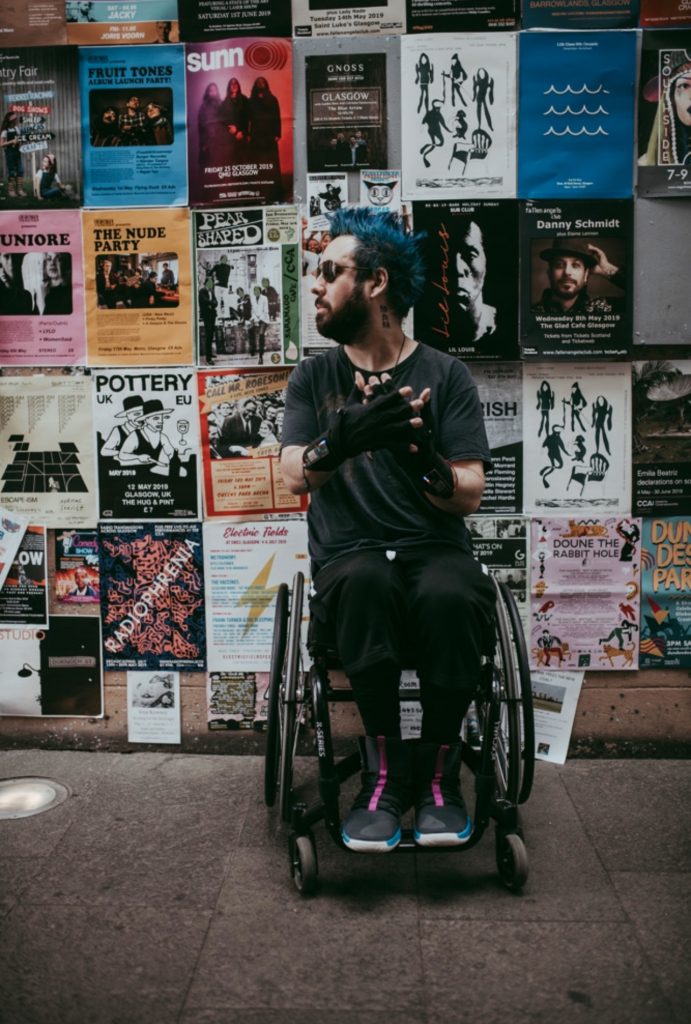
The MiMu Gloves represent what I consider to be the clearest musical example of the Social Model of Disability. I face barriers to traditional instruments because of my hand impairment. I can’t change the shape of a piano to allow my right hand to play a chord. But the barrier isn’t in me; it’s in the instrument, argues the Social Model. But with a glove, I can put the chord wherever I want, with any hand posture I can access. The glove – by the very nature of its design – removes the physical barrier to expression for me. The Gloves aren’t accessible to everyone of course – not everyone has hands – but the concept of how I use them is a kind of Social Model Musicality.
We can think about these two extremes – Medical vs Social – when we create any musical opportunity, either for ourselves as Disabled musicians, or for others as inclusive practitioners. What barriers are in the way of a person’s musical expression? I have to admit, while I’m skilled at solving these problems for others, I’m still learning how to apply this concept to my own musicianship. Maybe I always will be.
When I say I’m Disabled, that is what I mean. I face barriers that society owns. That historical musical pedagogy upholds. I don’t “have” a Disability. It’s not something you can have, I would argue. being Disabled is something you face, something that is put upon you by external forces.
The Social Model has been much more widely adopted in recent years, and I see it used to leverage meaningful action across the creative sector. I’ve been able to support embedding its usage across the arts sector, especially in music; and I’m grateful that so much has changed. I’d argue it creates a meaningful place to fully understand Disabled experience from, and something that can contribute to a richer and more human society.
Leave a Reply